——A Practical Guide to Street Photography Focal Length, Zoom vs Prime, and Natural Composition
By Lucas Bennett | Updated on April 01, 2026 | 🕓 10 min read
Key Highlights
- Why do technically perfect street photos still feel emotionally distant?
- How does physical distance affect the psychological impact of an image?
- Are zoom lenses changing your behavior without you noticing?
- Why do smartphone photos sometimes feel more authentic than camera shots?
- How can you train yourself to get closer—physically and visually?
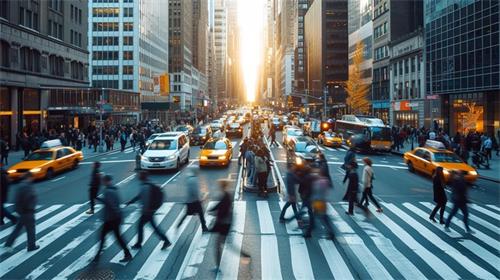
You’re standing at a busy crosswalk during late afternoon.
The light isn’t perfect—half the street is in shadow, half is blown out by harsh sun. Cars are inching forward. People are waiting for the signal to change, most of them staring at their phones.
A man in a dark jacket stands slightly apart from the crowd, holding a plastic bag. He looks tired. Behind him, a convenience store sign flickers, and a delivery rider cuts through the frame.
You notice the scene. Instinctively, you lift your camera and zoom in—tight on the man. You crop out the messy background, the traffic, the other people. Click.
Back home, the image looks clean. The subject is isolated. His expression is clear. Technically, everything works.
But something feels missing.
It doesn’t feel like a moment from the street. It feels like a person extracted from it. And you’ve taken this photo before—many times.
This isn’t a technical issue. It’s about how your tools quietly reshape the way you relate to the world.
Part 1: What Does “Awkwardness” in Street Photography Mean?
Awkward street photos tend to share a few traits:
l People look observed, not encountered
l Scenes feel like specimens, not flowing life
l Emotions are extracted, not experienced
l Viewers can sense that the photographer wasn’t really there—or worse, was “watching from afar”
Ironically, many technically “perfect” photos feel the most awkward. The background melts into creamy blur, the subject is razor sharp, perfectly isolated from the environment. You look at it and think: “This is very professional.” But you don’t feel like looking at it again.
Because viewers can sense where the photographer stood—and what kind of mindset they had when pressing the shutter. This “mode of presence” can’t be hidden.
Street photography isn’t about recording. It’s about participation.
You’re not photographing “a person.” You’re photographing the spatial relationship between you and that person in that moment. And zoom lenses are exceptionally good at quietly erasing that relationship.
Part 2: The Problem with Zoom Lenses Isn’t Image Quality—It’s Behavioral Change
Many people think the downside of zoom lenses is lower image quality or smaller apertures. But the real problem happens before you even raise the camera—it changes how you walk, stand, and see.
Three subtle shifts:
1. You Stand Farther Away
Every extra meter of physical distance multiplies psychological distance.
When you shoot someone using the long end of a lens like the Sony FE 70–200mm f/2.8 GM OSS II, your body has already exited the scene. You’re no longer “someone who is there.” You’re someone observing from afar.
You begin to behave like a sniper, not a passerby.
The subject becomes “material,” not a human interaction.
2. You Start “Selecting Frames” Instead of “Waiting for Moments”
The logic of zoom shooting is:
See something → zoom in → compose → shoot
With a lens like the Sony FE 24–70mm f/2.8 GM II, you can handle almost any situation. But precisely because it can do everything, you’re tempted to constantly adjust focal length instead of adjusting your position.
Over time, you rely on your hands—not your feet.
Part 3: Why Prime Lenses Work Better for Street Photography—Not Because They’re Sharper
Limitation is where style begins.
When you use a prime lens like the Canon RF 35mm f/1.8 Macro IS STM, you lose the option to zoom. You either move closer—or you miss the shot.
That sounds like a limitation, but in street photography, it becomes the starting point of style.
More importantly, primes don’t change image quality—they change your physical behavior:
l You move, because you can’t zoom
l You anticipate, because your field of view is fixed
l You wait, because you know subjects will enter your frame
The core skill of street photography isn’t operating a camera. It’s being physically present. Prime lenses force you to train that ability. Zoom lenses let you avoid it.
The “Behavioral Differences” of Classic Focal Lengths
l 28mm (e.g., Ricoh GR III): You must enter the environment. You’re close—sometimes noticed. You’re not photographing “a person,” but “your position next to that person.”
l 35mm (e.g., Fujifilm X100V): A balance between subject and environment. Close, but not intrusive. Feels closest to natural human perspective.
l 50mm (e.g., Sony FE 50mm f/1.8): Slight detachment. A hint of observation remains, but proximity is still required
It’s not the focal length that defines the image—it’s where that focal length forces you to stand.
A Simple Experiment You Can Try Tomorrow
Go out and shoot for 30 minutes. Do only one thing:
No zooming. Not even on your phone. Fix your lens at the widest end (e.g., 24mm or 28mm). If you only have a zoom lens like the Canon RF 24–105mm f/4L IS USM, tell yourself: today, I won’t touch the zoom ring.
Then go outside. Whenever you see something worth shooting, walk toward it. Stop when you feel “close enough”—then take three more steps forward. Then shoot.
When you get home, compare these photos to your previous zoomed-in shots.
Look at expressions, body posture, background layering—what’s different?
You’ll notice something immediate: people no longer look like “specimens caught from a distance.” They exist in the same space as you.
This isn’t psychological—it’s physical. Your angle changes, your eye-level relationship changes, the spatial layers shift. These are real, measurable differences.
Replace “Subjects” with “Relationships”
Most people shoot street photos like this: find an interesting person → aim → shoot.
This produces clear subjects—but shallow images. Because you captured a “thing,” not a relationship.
Next time, don’t just photograph a person. Ask yourself:
1. What is their relationship with the environment? (Light or shadow? Waiting or passing through?)
2. What is their relationship with others in the frame? (Alone in a crowd, or interacting?)
3. What is their relationship with you? (Eye level, high angle, low angle? Is something between you—glass, barriers, other people?)
Once you start asking these questions, your images naturally gain depth. Because you’re no longer photographing “a person,” but a complete moment: a person, in a place, in a state, at a certain distance from you.
Part 4: What About Smartphones?
Here’s a counterintuitive reality: many people shoot more natural street photos with phones than with professional cameras.
Why? Because you don’t look like a photographer.
The moment you raise a large camera, you send a signal: “I’m taking a photo.” People react—avoid, stiffen, pose. What you capture is no longer real life, but life altered by the presence of a camera.
People say phones work better because they’re “convenient.”
More accurately: phones remove your ability to step back.
The real difference between a camera and a phone isn’t image quality—it’s behavioral signaling. Cameras emphasize the act of shooting. Phones blend into everyday life.
Phones let you disappear. Cameras make you visible.
In street photography, the less visible you are, the more real your images become.
Part 5: How to Avoid Awkwardness with Any Gear
No matter what you use, you can reduce that “awkward” feeling. It’s not about gear—it’s about behavior.
If You Use a Zoom Lens:
1. Fix a focal length—pretend it’s a prime
Tape the zoom ring if needed. Today, shoot only at 35mm. Tomorrow, 50mm. No adjustments mid-shot.
2. Move with your feet, not your hands
Ask: “Where should I stand for this focal length?” Then go there. Can’t? Then skip the shot. Skipping is part of training.
3. Turn off stabilization (a psychological trick)
Stabilization makes you comfortable staying far away. Turn it off, and you’ll instinctively move closer.
If You Use a Prime Lens:
l Practice positioning in advance—don’t wait for subjects, let them enter your frame
l Pre-compose—your frame is ready before the moment arrives
l Learn to let go—missing a shot is better than forcing an awkward one
If You Use a Smartphone:
l Get closer—closer than feels comfortable
l Use environmental cover—shoot through windows, doorways, people
l Capture relationships, not isolated subjects
Part 6: Thoughts on Gear (Not an Ad—Just Direction)
Three key traits for street photography gear:
lightweight, unobtrusive, fast to activate. Image quality comes fourth.
l Beginner mindset: your phone + one rule (“always move closer”)
l Intermediate: a small mirrorless or rangefinder + a 28mm or 35mm prime
l Travel setup: if you need zoom flexibility, bring one—but lock it to a single focal length during shooting
What matters isn’t what you buy. It’s how close you’re willing to get—and how long you’re willing to wait.
Part 7: A Deeper Conclusion
Authenticity in street photography never comes from specs.
It comes from proximity.
The problem with zoom lenses isn’t that they’re bad. They’re excellent tools—for wildlife, sports, weddings. In those situations, you can’t get close. Distance is necessary.
But street photography is different. It’s everyday life—and you are part of it.
When you stand far away with a long lens, what you’re really saying is:
“I don’t want to enter this scene. I just want to take something from it.”
Cameras don’t ruin moments. Position does.
You think you’re using a lens to change the image—but the lens is changing your relationship with the world.
So next time you head out, ask yourself a more honest question:
How close am I willing to get?
The answer isn’t on the zoom ring. It’s in your feet.
FAQs
1. What is the best focal length for street photography beginners?
35mm is often the most versatile starting point. It balances subject and environment and closely matches natural human perspective.
2. Do I need to interact with people to take good street photos?
Not necessarily verbally, but spatial interaction matters. Your position, angle, and proximity already form a kind of “conversation.”
3. Why do subjects look more natural when shot up close?
Closer distance changes perspective, eye-level alignment, and environmental context, making the viewer feel present rather than detached.
4. Can smartphone photography replace a dedicated camera for street work?
In many cases, yes. Smartphones excel in discreteness and spontaneity—two critical elements in authentic street photography.
5. How can I overcome the fear of getting close to subjects?
Start gradually. Practice in busy environments, use wider focal lengths, and normalize proximity. Over time, it becomes instinctive.
References
1. Cartier-Bresson, H. (2014). The decisive moment. Thames & Hudson.
2. Freeman, M. (2020). The photographer’s eye: Composition and design for better digital photos (2nd ed.). Routledge.
3. Hunter, F., Biver, S., & Fuqua, P. (2021). Light: Science and magic: An introduction to photographic lighting (5th ed.). Routledge.
4. Szarkowski, J. (2018). The photographer’s eye. Museum of Modern Art.
5. Wells, L. (2021). Photography: A critical introduction (6th ed.). Routledge.
6. Meyerowitz, J. (2022). Where I find myself: A lifetime retrospective. Laurence King Publishing.
About the Author
Lucas Bennett
Focus: Real-World Shooting Limitations, Perception vs Gear
Lucas Bennett writes about the gap between camera performance and real-world results. His work focuses on the hidden limitations of autofocus systems, zoom lenses, and high-end gear—revealing why better equipment doesn’t always lead to better photos.
Editorial Transparency Statement
This article is based on real-world shooting experience, observational analysis, and established photographic theory. Any gear mentioned is included solely to illustrate practical use cases and behavioral patterns, not as paid promotion or endorsement.
No sponsorships, affiliate incentives, or brand partnerships influenced the content of this article.
Disclaimer
This content is for informational and educational purposes only. Photography practices may vary depending on location, cultural context, and legal considerations. Readers are encouraged to respect local laws, personal privacy, and ethical guidelines when engaging in street photography.
Recommend:

You Tried Shooting Product Photos at Home—But They Look Cheap
Why Your Dog Photos Never Look Sharp—Even When They’re Not Moving (And Why That’s Not the Real Problem)
Why Your Street Photos Feel Awkward—And How Zoom Lenses Quietly Ruin the Moment
The Hidden Risk of Building a Photography Portfolio on Third-Party Platforms