
By Ryan Mitchell | Updated on April 10, 2026 | 🕓 12 minutes
Key Highlights
- If referrals dominate the industry, how can beginners compete without trust?
- How much does it actually cost to start a wedding photography business?
- What makes wedding photography more stressful than other photography niches?
- How do you avoid attracting high-maintenance clients when starting out?
- What systems separate photographers who last 3+ years from those who quit?
- Is wedding photography a sustainable long-term career—or a burnout trap?
I. A Counterintuitive Industry Truth
Wedding photography is one of the few industries where the barrier to entry looks extremely low but the hidden barrier is actually extremely high.
A set of numbers illustrates this contradiction: 78% of high-end clients find photographers through Google search, yet 70% of established photographers get their clients through referrals. This means beginners are facing a kind of “trust desert”—you may have technical skills, but no portfolio; you may have a portfolio, but no client validation; you want clients, but clients only trust what has already been proven.
Among the wedding photographers I know, fewer than 30% make it past the third year. Not because they can’t shoot well, but because they underestimate the real cost structure behind getting the first booking. This industry is never short of “people who can take photos.” What it lacks are people who can consistently deliver under high pressure—and actually understand their numbers.
II. How Do You Actually Get Your First Booking? Breaking the No-Portfolio Loop
2.1 The Portfolio Paradox: No Clients → No Work, No Work → No Clients
This is the classic loop every beginner gets stuck in. There are three practical ways to break it, ranked by effectiveness:
Path A: Become a Second Shooter
This is the most direct and lowest-risk path. You work as an independent contractor for an established photographer, shooting under their brand and helping deliver a real wedding.
A typical wedding can pay $20–$75/hour. More importantly, you gain real wedding portfolio material with usage permission.
But getting second shooter opportunities requires strategy. San Francisco Bay Area photographer Zoe Larkin shared that she once worked in a studio admin role for six months before being invited to shoot; another photographer assisted for 11 months without pay. There is no “fast track” here—trust is built over time.
Path B: Styled Shoots
You collaborate with florists, venues, and makeup artists to create a “simulated wedding.” This is not deception—it’s a standard industry method for building portfolios.
The key is mutual benefit: for example, photographing a venue in exchange for promotional content, tagging rights, and referral exposure.
Path C: Social Leverage Strategy
Shoot engagement sessions for friends or local micro-influencers for free in exchange for usage rights and social media exposure.
Important: free ≠ unrestricted. You must clearly state that this is a portfolio shoot and that you have publishing rights, or you risk future disputes.
2.2 Real Conversion Rates of Client Acquisition Channels
Based on 2025–2026 industry data, here is the effectiveness of major channels for beginners:
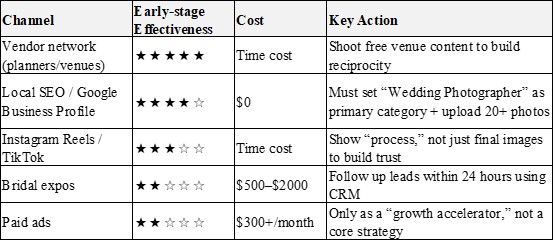
A rarely discussed truth: pricing psychology for your first booking matters more than you think. Do NOT simply discount heavily. Low pricing attracts high-maintenance clients and damages your future price anchor.
Instead, design packages around “time + deliverables + experience,” not hourly rates. Always require a 30–50% deposit—this alone filters out “just curious” inquiries more effectively than anything else.
III. Why Wedding Photography Pays Well—But Many People Quit
3.1 The Real Cost Structure: Your Profit Is Not What You Think
2026 U.S. market data shows startup costs are often severely underestimated:
Minimum startup baseline:
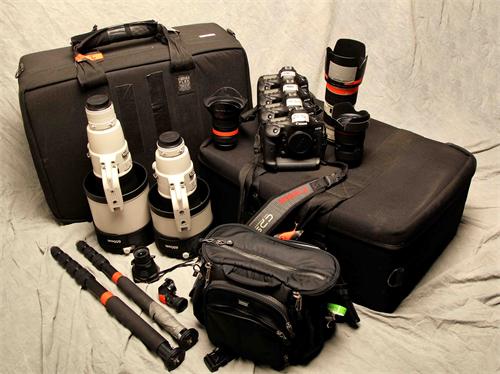
l Gear: $10,000–$15,000 (dual camera bodies + professional lenses + backup storage)
l Software & editing: Adobe subscription $120–$240/year, computer $600–$2500
l Insurance & legal: liability insurance $200–$600/year, LLC registration $50–$500
l Hidden costs: client gifts, travel, storage backups, gear depreciation, marketing expenses
True per-wedding profit example:
```
Fee: $3,000
- Gear depreciation/insurance allocation: $300
- Editing time (20–40 hours opportunity cost): $800
- Travel/food/assistant: $200
- Marketing allocation: $150
- Taxes (self-employment tax): $600
─────────────────────
Real take-home profit: $950 (~31%)
```
Even worse, established photographers are leaving the industry due to burnout, while newcomers are replacing them at lower prices ($1,500 or less). This creates ongoing downward pressure on profit margins.
3.2 “Only One Day, No Second Chance” — The Core Pressure
This is what most tutorials avoid discussing. The pressure in wedding photography is not just “being busy”—it is irreversibility.
Time pressure: Weddings do not pause. Ring exchange, first look, parental speeches—each moment happens once. There is no redo.
A photographer from Hangzhou described it like this:
“The first look moment when the groom sees the bride for the first time is very important emotionally. We’re especially afraid of situations where a team wants to pause and redo it after taking photos. When it happens again, the emotion is already different. It’s like rewriting an essay after the teacher corrects it—it just doesn’t feel the same anymore.”
Physical demand: 12+ hour shooting days are standard. One photographer said:
“After my second wedding shoot, I went for coffee the next morning and felt like my whole body was broken.”
Another added:
“In summer, sweating nonstop is exhausting; in winter, waking up at 6 a.m. feels like your head is already hurting.”
Editing black hole: A single wedding produces 3,000–5,000 RAW images. Culling, editing, and delivery often takes 3–5 times the shooting duration. Many beginners only price the shooting day, not the post-production week.
Reputation risk: One failure—corrupted card, missed ceremony moment, dead battery—can end a career instantly. This is not exaggeration; it is structural.
3.3 Why High Revenue ≠ High Profit
Seasonality: In the Northern Hemisphere, wedding season is concentrated from May to October. Income drops sharply in off-season.
Physical burnout: Continuous 10–12 hour shoots plus late-night editing lead to long-term health costs that are rarely accounted for.
Relationship maintenance cost: 70% of bookings come from referrals. This means constant relationship management—birthday messages, anniversary reminders, social engagement—which is not in your contract but is in your calendar.
IV. A Survival Decision Map for Beginners
4.1 Entry Self-Checklist (Be Honest)
〇 Do I have $10,000–$15,000 startup capital (or phased investment ability)?
〇 Can I survive 6–12 months without wedding income?
〇 Do I have at least one financial safety net (side job/savings/partner income)?
〇 Can I handle technical, interpersonal, and time pressure simultaneously?
〇 Am I willing to spend 30–40% of my time on editing and client communication?
If any answer is “no,” it is better to solve that first before entering the industry.
4.2 Minimum Viable Path for the First 6 Months
Month 1–2: Gear setup + assist in 2–3 weddings as second shooter. Do not be selective—build vendor relationships.
Month 3: Complete 2–3 styled shoots with florists/venues. Always provide value first before asking for referrals.
Month 4: Launch website + Google Business Profile + 3 blog posts (500+ words each, including venue names). Local SEO is the foundation of free leads.
Month 5: Set pricing. Align with local market averages—do not undercut. Prepare contracts, deposit terms, and delivery timelines.
Month 6: Deliver first paid wedding, build feedback loop, and establish referral system. Send 3–5 preview images within 48 hours after shooting.
4.3 Long-Term Anti-Fragile Strategy
Income diversification: Engagement shoots, anniversary sessions, and family portraits stabilize off-season income.
Capacity limits: Set annual wedding cap (e.g., 25–30 weddings) to prevent burnout. Only 5% of photographers feel they manage stress well—you don’t want to be in the 95%.
Technical redundancy: Dual-card cameras, cloud backup, backup body—this is not optional; it is professional insurance. One data loss can end everything.
Community building: Build referral networks with other photographers. When fully booked, pass overflow work to trusted peers. This is not zero-sum; it is ecosystem-based survival.
V. Conclusion: This Is Not a “Love Alone Will Make You Succeed” Industry
Wedding photography punishes both technical arrogance and business naivety. You need enough passion to stay focused during long editing nights, and enough clarity to avoid underpricing yourself into exhaustion.
Your first booking will not transform your bank account—but it will tell you whether you actually belong in this industry.
Instead of spending a year “trying,” spend one month validating: assist at a wedding, edit a full set, and calculate real costs.
Then decide.
FAQs
1. What is the biggest mistake new wedding photographers make?
Underpricing their services. This often leads to difficult clients, burnout, and an unsustainable business model.
2. How long does it take to become profitable?
Typically 1–3 years. The first year is often investment-heavy with minimal or negative profit.
3. Do I need expensive gear to start?
You need reliable, redundant gear—not necessarily the most expensive. Dual camera bodies and backup storage are non-negotiable.
4. How important is social media for getting clients?
Helpful but not dominant. Referrals and vendor relationships are more powerful long-term acquisition channels.
5. Can wedding photography be a side hustle?
Yes, but it’s demanding. The time commitment (shooting + editing) often makes it feel like a second full-time job.
References
1. Bureau of Labor Statistics. (2024). Photographers: Occupational outlook handbook. U.S. Department of Labor. [https://www.bls.gov/ooh/media-and-communication/photographers.htm]
2. IBISWorld. (2023). Photography in the US - Market Research Report. IBISWorld Industry Reports.
3. PPA (Professional Photographers of America). (2024). Photography industry benchmarking report. [https://www.ppa.com]
4. The Knot Worldwide. (2023). Real weddings study: Vendor hiring and spending trends. [https://www.theknot.com]
About the Author
Ryan Mitchell
Focus: Freelance Photography, Client Work, Pricing
Ryan Mitchell focuses on the business side of photography, including client work, pricing strategies, and freelance survival. His writing breaks down how photographers turn skills into sustainable income in competitive markets.
Editorial Transparency Statement
This article is based on a combination of industry data, publicly available reports, and real-world experiences from working wedding photographers. While some examples and anecdotes are drawn from practitioner insights, all effort has been made to ensure accuracy, relevance, and practical applicability.
No sponsorships or commercial partnerships influenced the content of this article.
Disclaimer
This content is for informational purposes only and does not constitute financial, legal, or business advice. Income potential, costs, and career outcomes in wedding photography vary significantly based on location, market conditions, individual skill level, and business strategy.
Readers are encouraged to conduct independent research and consult with professionals before making financial or career decisions.
Recommend:

Why Sharpness Doesn’t Fix Boring Plant Photos (Even with Expensive Gear)

When a Paid Shoot Goes Wrong: Who Pays for Gear Damage, Injuries, and Liability?

You Tried Shooting Product Photos at Home—But They Look Cheap
Why Your Street Photos Feel Awkward—And How Zoom Lenses Quietly Ruin the Moment