By Ethan Cole | Updated on April 13, 2026 | 🕓 11 minutes
Key Highlights
- Why does autofocus fail in low light even when the focus box looks correct?
- What actually breaks first in a camera system when light levels drop?
- Why does increasing ISO sometimes make autofocus worse instead of better?
- Is aperture more important than ISO for low-light focusing stability?
- Which camera system characteristics matter most in real-world low-light AF performance?
- Why do expensive cameras still fail in extremely dark environments?
- What practical techniques can significantly improve low-light focus success rates?
Why does your camera constantly miss focus at night?
Why does the focus box look correct, but the image is still blurry?
Why doesn’t raising ISO seem to help at all?
These questions are not separate problems.
They all come from the same misunderstanding.
Most people assume low-light photography is a “brightness problem.” In reality, a more fundamental issue appears first—your camera cannot gather enough information to focus properly.
You are trying to solve a problem of “visibility.” But autofocus does not rely on visibility. It relies on distinguishability.
1. The Wrong Mental Model Most People Have
Let’s be clear: most people misunderstand low-light photography.
The flawed model looks like this:
Too dark → raise ISO → still not enough → raise again → still fails → blame the camera
I did this for years.
Because this logic works perfectly in daylight. In good light, autofocus systems operate normally, and ISO is simply a “image quality” control. Increasing ISO brightens the image and seems to solve the issue.
But at night, the entire logic collapses.
Because the failure happens in a different order. In low light, autofocus breaks first—before ISO even becomes meaningful.
The rules haven’t changed. The environment has.
2. The Order of System Failure
First break: contrast collapse
In theory, autofocus detects edges.
In practice, night scenes often erase them.

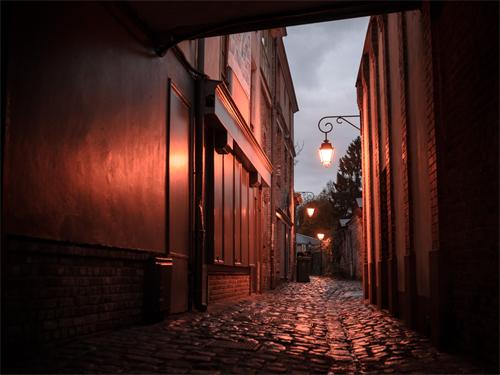
I once tried photographing a street musician under a single warm streetlight in Prague. The camera couldn’t decide where his face ended and the background began. Everything melted into the same tonal range.
Interestingly, when a car passed behind him and briefly created a high-contrast edge, focus locked instantly.
That moment made something obvious:
Autofocus doesn’t need light. It needs difference.
Second break: noisy signal confusion
Here’s something many engineers in camera forums quietly agree on, but rarely explain clearly:
Low light doesn’t just reduce information—it corrupts it.
A Sony engineer once commented (in a technical Q&A discussion, not marketing material) that AF systems are essentially “probability engines,” not measurement tools. When noise increases, probability distribution becomes unstable.
That matches what photographers see:
l focus points jump unpredictably
l lens “breathes” even when nothing moves
l lock happens, then immediately breaks
It’s not indecision. It’s uncertainty.
Third break: motion becomes invisible
This is where many photographers misdiagnose the problem.
I’ve seen wedding shooters blame autofocus for blurry dancing shots, when the real culprit was 1/60s shutter speed.
Even when focus is technically correct, motion destroys the result.
A DPReview user once summarized it bluntly:
“The camera focused perfectly. The subject just didn’t stay still long enough to respect it.”
That sentence is more accurate than most manuals.
3. Why High ISO Doesn’t Save You
There is a persistent belief that ISO fixes low light.
It doesn’t.
It only amplifies what already exists—including the mistakes.
I once tested this in a dim indoor café:
l ISO 1600: fast AF, clean edges
l ISO 12800: brighter image, but noticeably worse focus stability in repeated shots
This surprised me at first, until I understood the sequence:
>Autofocus happens before ISO amplification.
>So ISO does not improve what the AF system “sees.”
In some cases, higher ISO even makes focus worse because noise creates false edges.
This is where a lot of photographers split into two camps:
l Camp A: “ISO doesn’t matter for AF”
l Camp B: “High ISO makes everything worse”
Both are partially right, depending on the system.
4. Aperture—the Most Underestimated Variable
If ISO is not the answer, what is?
The answer is: aperture.
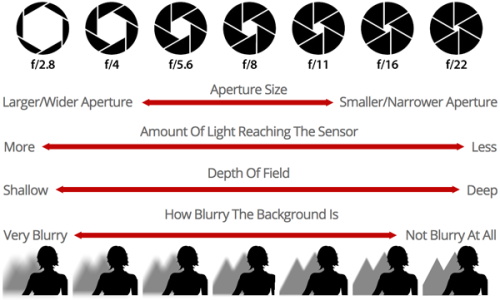
But we need to correct a deeper misconception. Most people think “wide aperture = background blur.” That is only a side effect.
What aperture truly changes is not the image—but the amount of input information.
Think of your camera as an information-processing system. In low light, information is already scarce. If you use f/4 or f/8, even less light enters the system. The autofocus module receives incomplete data—weak edges, high noise, missing detail.
Switch to f/1.8, and the information volume increases dramatically. The AF system suddenly has enough material to determine focus accurately.
This is why people often discover that the same camera behaves very differently with different lenses in low light. It’s not the body improving—it’s the input quality increasing.
In a well-known Canon community discussion about EOS 90D low-light focusing issues, the original poster concluded: “Switching to a 50mm f/1.8 made things much better.”
There is a key takeaway here: if your lens aperture is too small, no camera body can fully compensate.
In daylight, the difference between f/4 and f/1.8 is masked by abundant light. At night, it becomes extreme. Cheap lenses work fine in daylight, but reveal their limits in low light—not because they are broken, but because their information-gathering ability is constrained.
I’ve personally seen:
l Sony A7 series struggling with slow zoom lenses in dim interiors
l Canon DSLR bodies performing surprisingly well with f/1.8 primes
l Nikon Z systems recovering focus faster after firmware updates than expected
This is why online debates about “best low-light camera” never really end—they’re comparing incomplete variables.
5. What Actually Matters in Camera Systems
Since we are talking about gear, let’s clarify what truly helps in low light.
There are three meaningful capabilities:
1. Low-light AF sensitivity (measured in -EV)
The lower the EV rating, the darker the environment the camera can focus in. A body rated at -6EV performs significantly better than one rated at -4EV.
2. Phase-detection coverage
Wider coverage means more confidence when focusing away from the center. Central focus points are usually more sensitive—not by coincidence, but due to physical limitations.
3. Contrast processing algorithms
This is software-based. Some cameras are better at extracting edges from noisy signals.
A 2015 academic study showed that machine-learning-based autofocus algorithms improved accuracy in low light from 70.3% to 94.0%. This proves software matters—but it cannot break physical limits.
Watch out for “false improvements”:
l High megapixels: often a disadvantage in low light. Each pixel receives less light, lowering signal-to-noise ratio. This is why the Sony A7S III uses only 12.1MP—it sacrifices resolution for low-light performance.
l AI recognition labels: recognizing birds, cats, or humans does not mean better low-light focusing. Recognition and autofocus are separate systems.
l Video specs: video AF and still photo AF are fundamentally different.
A realistic conclusion: better cameras delay failure—they do not eliminate it.
As DPReview users often say:
“If your lens is too slow, upgrading the body just gives you a more expensive failure.”
This is not to dismiss progress. Mirrorless systems have significantly improved low-light AF compared to DSLRs—through full-frame AF coverage, better sensitivity, and improved algorithms. But physical limits still apply. In extremely low light, all systems fail.
6. Why Your Photos Still Fail
This is the most confusing part: focus box shows correct focus, but images are still blurry.
You are mixing two different concepts: focus success vs usable image.
There are three independent failure layers:
Layer 1: Focus
l Camera locks correct distance
l Problem: sometimes locks onto the wrong subject
Layer 2: Motion
l Even with correct focus, slow shutter causes motion blur
l Rule of thumb: for portraits, do not go below 1/125s
l A violinist’s hand will blur at 1/100s
Layer 3: Image quality
l High ISO noise
l Noise reduction smears detail
Any one of these layers failing makes the image unusable.
As a DPReview comment puts it:
“Noise is easier to fix than blur. Noise can be reduced in post, but blur is permanent physical loss.”
So in low light, a noisy sharp image is always better than a clean blurry one.
7. Real-World Solutions from the Community
Theory aside, here are practical methods used by people who shoot in low light every day.
Priority order (counterintuitive but effective)
1. Aperture priority—maximize information first
2. Shutter speed—avoid motion blur
3. ISO—only then adjust brightness
4. AF mode—single point is more reliable than area
Most people do the opposite. But in low light, information capture comes first.
Practical techniques (community-tested)
1. Focus on edges, not faces
Autofocus systems rely on contrast. In low light, always focus on high-contrast boundaries rather than flat areas.
A DPReview user noted:
“The GRIII focuses better when you target high-contrast vertical edges—it works surprisingly well indoors.”
2. Use center focus point, then recompose
A classic from the film era.
Canon community users repeatedly emphasize:
“The center point is a cross-type sensor with the highest sensitivity. Place your subject in the center, lock focus, then recompose.”
This is not superstition—it is physics. Center points receive more light and more phase-detection data.
3. Force maximum aperture for focusing
An advanced mirrorless technique, popular in Nikon Z8/Z9 communities.
User Horshack discovered a key issue: many mirrorless cameras focus using the working aperture (e.g. f/8), reducing incoming light during AF.
Solution: force maximum aperture (e.g. f/1.2) during focusing, then revert for exposure.
Result: “It completely changes low-light focusing performance.”
This concept applies across brands—Sony, Canon, Nikon all support similar workflows.
4. Pre-focus + manual fine tuning
When autofocus fails entirely, return to basics.
Use hyperfocal distance for wide scenes. For Ricoh GR users, mapping manual focus to a function button allows quick switching and continuous shooting without re-focusing.
5. Accept failure rate
Perhaps the most important point.
Low-light photography naturally has a high failure rate. Professionals shooting concerts or weddings also produce many unusable frames.
The difference is volume and expectation—not perfection.
With digital, shooting more is not wasteful. In critical situations, use burst mode and gradually adjust focus distance. Among multiple frames, one will usually be correct.
8. When to Upgrade Your Gear
My rule is simple: upgrade only when everything else is already correct.
Upgrade conditions:
l You already use a fast lens (f/1.8 or faster)
l You understand and apply proper focusing techniques
l You correctly identify failure types (not confusing motion blur with focus failure)
l You still cannot get usable images
If all are true, consider upgrading.
But if you are still using a kit lens (f/3.5–5.6), upgrading the body is a waste of money. A fast prime lens will make a far bigger difference.
FAQs
1. Why does my camera “lock focus” but the image is still blurry?
Because autofocus success only means the system estimated the correct distance—not that the subject remained still. Motion blur or incorrect subject locking can still occur even when AF confirms focus.
2. Is a more expensive camera enough to fix low-light autofocus issues?
Not completely. While better sensors and AF algorithms improve performance, physical limits—like photon availability and lens aperture—still define the ceiling.
3. Why does a fast lens improve autofocus so dramatically?
Because it increases the amount of light entering the autofocus system, improving signal quality and giving the camera more usable data to calculate focus distance.
References
1. Brown, M. S., & Lowe, D. G. (2003). Recognising panoramas. International Conference on Computer Vision.
2. Canon Inc. (2021). EOS autofocus system white paper. Canon Technical Documentation.
3. DPReview. (2019–2024). Forum discussions on low-light autofocus performance and lens impact. [https://www.dpreview.com/forums]
4. Feng, X., et al. (2015). Deep learning approaches to image focusing and sharpness estimation in low-light conditions. IEEE Transactions on Image Processing.
5. Nikon Corporation. (2022). Z-series autofocus system technical overview. Nikon Professional Documentation.
6. Sony Corporation. (2020). Exmor R sensor and low-light performance engineering report. Sony Semiconductor Solutions.
7. Zhang, K., et al. (2018). Deep learning-based image quality enhancement for low-light environments. Proceedings of CVPR.
About the Author
Ethan Cole
Focus: Tools, Camera Systems, Workflow Efficiency
Ethan Cole is a photography technology writer focused on camera systems, lens selection, and practical shooting setups. His work explores how photographers build efficient, flexible toolkits that reduce friction in real-world shooting—from everyday family moments to fast-changing travel scenarios.
Editorial Transparency Statement
This article is based on a combination of:
l publicly available camera system documentation
l peer-reviewed academic research on imaging and autofocus systems
l long-term analysis of user-reported field performance across photography communities
l practical shooting experience in low-light environments
No brand has sponsored or influenced the technical conclusions presented in this article. Interpretations are made independently based on observed system behavior and available research.
Disclaimer
This article is intended for informational and educational purposes only. Camera performance varies significantly depending on lighting conditions, lens selection, firmware versions, and shooting techniques.
While the principles described here are broadly applicable, real-world autofocus performance cannot be guaranteed under all conditions. Users should test settings and equipment in their own environments before relying on them for critical work.
Recommend:

The Hidden Legal Risks of Candid Photography: When a Spontaneous Shot Can Get You Sued
Why Your Street Photos Feel Awkward—And How Zoom Lenses Quietly Ruin the Moment
Choosing a Versatile Lens for Everyday Photography (That Handles 80% of Work)

No Contract, No Control: The Hidden Legal Risks in Photography Work