— Can Someone Sue You for Taking Their Photo? Real Cases, Grey Areas, and What Actually Matters
By Oliver Grant | Updated on April 05, 2026 | 🕓 ~12–15 minutes
Key Highlights
- When can candid photography become a privacy violation?
- Why can the same street photo be legal in one country but illegal in another?
- How does commercial use change the legal status of an image?
- Can a person in a photo sue even if they are not the photographer?
- Why might a photographer be sued even when shooting from their own home?
- How do consent and model releases actually protect photographers in practice?
- What are the new legal risks introduced by social media and AI distribution?
In April 2025, on Anfu Road in Shanghai, a female teacher publicly confronted a group of street photographers surrounding her:
“You have no right to photograph random passersby!”
The photographers believed they were “documenting urban life.”
The subject believed her dignity had been violated.
Both sides stood their ground. Police intervened. The video went viral, sparking intense debate on social media.
This is not a discussion about the aesthetics of street photography.
It’s a real-world warning: the moment you press the shutter, you may be breaking the law.
Even more counterintuitive: in a parallel scenario, the person being photographed can become the defendant.
In 2024, supermodel Gigi Hadid was sued by a photo agency after posting a paparazzi image of herself on Instagram.
The subject of the photo became the infringer.
Part 1: The Biggest Misconception — “Public Space = Free to Shoot”
1.1 Public Space ≠ No Rights
Many people assume:
“If I’m shooting on the street, what’s the problem?”
Legally, the answer is far more nuanced.
The key concept is Reasonable Expectation of Privacy.
Even in public spaces, the law may still protect individuals from being photographed unreasonably.
The real question is not: “Can I take this photo?”
But rather: “Does this person have a valid reason not to be photographed?”
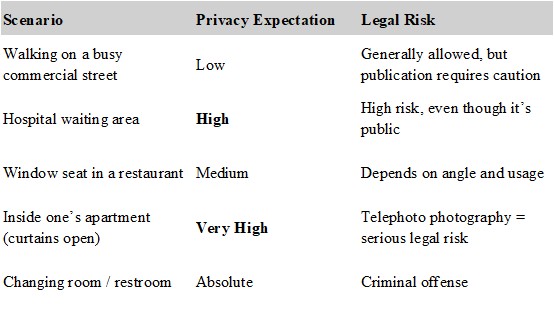
1.2 Three High-Risk Scenarios
Scenario 1: Street Photography
This is both the holy ground of artistic photography—and a hotspot for legal disputes.
In 2005, photographer Philip-Lorca diCorcia set up lighting and a tripod in Times Square and captured thousands of close-up portraits of strangers. The series, Heads, included an image of Erno Nussenzweig, an 80-year-old Orthodox Jewish man.
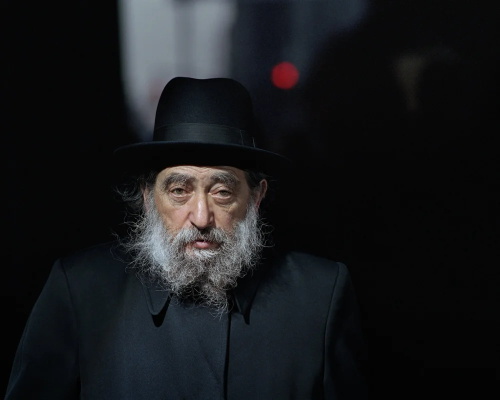
Philip-Lorca diCorcia, Head #13, 2000 © Philip-Lorca diCorcia
Three years later, Nussenzweig discovered his portrait was exhibited and sold for $20,000–$30,000.
He sued, arguing that his religion prohibited image-making and that the photo caused him humiliation.
The court dismissed the case.
Reason: artistic expression is protected under the First Amendment.
Selling limited-edition prints did not change its artistic nature.
But here’s the catch:
This outcome is highly specific to the United States.
In countries like Canada, Germany, or France, the result could be completely different.
Scenario 2: Children / Minors
Globally, children are a legal “red line.”
In 2025, the lawsuit involving Nevermind by Nirvana reached its final stage.
The baby on the album cover, Spencer Elden, sued decades later, claiming the image constituted child pornography and demanded $150,000 in damages.
On September 30, 2025, a federal court dismissed the case.
Judge Fernando Olguin ruled that the image resembled “a typical family photo of a baby during bath time” and did not qualify as child pornography.
However, the court also noted that Elden had profited from the image over the years, including recreating the pose as an adult—undermining his claim of harm.
The deeper unresolved question:
Can parental consent given on behalf of a child be revoked once the child becomes an adult?
For now, the answer is no—but the debate is far from settled.
Scenario 3: Vulnerable or Sensitive Individuals
Homeless individuals, patients, or people in emotional distress—even in public—have a higher expectation of privacy.
Photographing them carries both legal and ethical risks.
A simple rule:
If your subject cannot meaningfully say “no,” you should assume the answer is “no.”
Part 2: From Photographer to Defendant — Three Triggers
2.1 Privacy Violation
Core risks: hidden photography, telephoto intrusion, private moments.
In 2012, photographer Arne Svenson used a telephoto lens to photograph neighbors inside their apartments across the street.
The series, The Neighbors, was exhibited and sold for up to $7,500 per image.
The subjects, the Foster family, sued for invasion of privacy, calling it “technological home intrusion.”
Result: The New York Supreme Court dismissed the case twice.
The work was deemed protected artistic expression.
The court even stated:
“Curtains, not lawsuits, are the proper remedy.”
This case is striking:
l Photographer shot from his own home
l Subjects were inside their homes (maximum privacy expectation)
l Telephoto lens used
l Images sold commercially as art
Yet the photographer still won.
But again—this is highly jurisdiction-specific.
Practical warning: Even in public, the following can trigger liability:
l Zooming into someone’s phone or laptop screen
l Capturing intimate behavior (e.g., couples)
l Photographing distress, embarrassment, or medical emergencies
2.2 Right of Publicity / Personality Rights
Core rule: Commercial use = high risk
This is one of the most common reasons photographers get sued.
In the landmark Canadian case Aubry v. Éditions Vice-Versa, a 17-year-old girl, Pascale Claude Aubry, was photographed sitting on a street in Montreal.
The image was published in an art magazine.
She sued and was awarded damages.
The Supreme Court of Canada upheld the ruling:
Public interest in seeing the image does not override an individual’s right to privacy.
This established a key principle in Canada:
Even in public spaces, individuals retain control over their image.
Compare that with the U.S. diCorcia case—same setup, opposite result.
2.3 Defamation & Misuse
A neutral image can become defamatory through context.
Example:
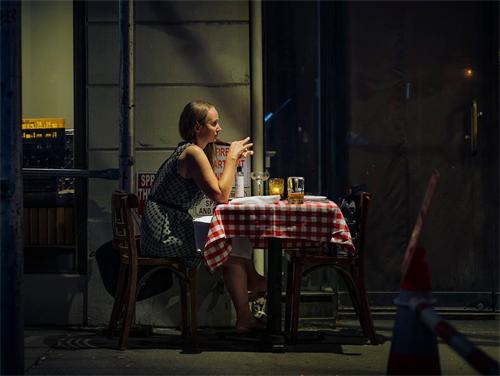
You photograph a woman crying in a restaurant.
You caption it: “Caught cheating.”
Even if the image itself is lawful, the caption may constitute defamation.
2.4 Copyright Trap — When the Subject Gets Sued
In the U.S. and many common-law countries:
Copyright belongs to the photographer—not the subject.
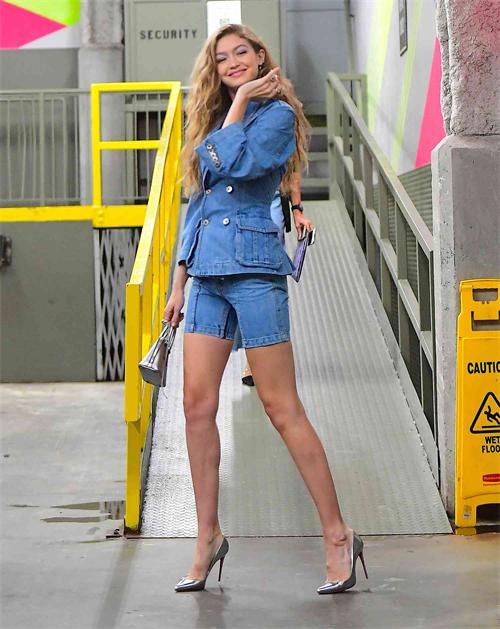
Gigi Hadid
That’s why celebrities often get sued for posting photos of themselves.
Cases include:
l Gigi Hadid
l Victoria Beckham
l Justin Bieber
l Jennifer Lopez
l Robin Thicke
These are copyright lawsuits—not personality rights claims.
Two completely separate legal tracks:
l Photographer → may violate personality/privacy rights
l Subject → may violate copyright
Key takeaway:
l Photographers: owning copyright ≠ having model consent
l Subjects: being in the photo ≠ owning the photo
Part 3: The Overlooked Grey Areas
3.1 Editorial vs Commercial — A Blurred Line
Traditionally, laws distinguish between:
l Editorial use (news, art)
l Commercial use (ads, promotion)
But in 2026, the boundary is almost gone:
l Blogs with ads → commercial?
l Portfolio websites → commercial?
l Instagram with brand deals → even unpaid posts count?
Courts often evaluate context and real-world impact, not your stated intent.
3.2 Consent Is Not Absolute Protection
Even with consent, risks remain:
l Verbal vs written consent (verbal is hard to prove)
l Withdrawal of consent
l Minors → future legal challenges
Best practice: Use a written model release specifying usage, duration, territory, and exclusivity.
3.3 AI, Redistribution, and Secondary Use
New risks unique to the 2020s:
l Algorithmic redistribution to unintended audiences
l Unauthorized downloads and commercial reuse
l AI training datasets using your images without consent
The real risk is no longer just the moment of capture—but loss of control after publication.
Part 4: A Practical Decision Framework
Before pressing the shutter, ask yourself:
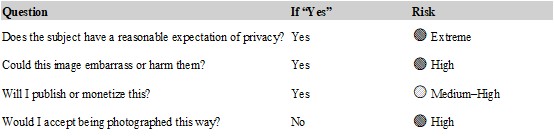
Only proceed if all answers are safe.
Three Safest Practices
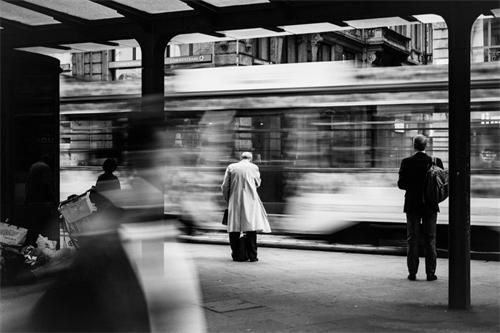
1. Shoot non-identifiable images
Silhouettes, blurred faces, environmental focus
Less identifiability = less risk
2. Get clear consent
Ask after shooting
For serious work → written release
3. Avoid commercial use
If your platform generates income, be extra cautious
If You’re the Subject: How to Respond
1. Ask for deletion on the spot
2. File a complaint with the platform
3. Call the police (if harassment or voyeurism involved)
4. File a civil lawsuit
5. Criminal action (in extreme cases: harassment, defamation, profit-driven misuse)
The New Ethical Contract of Photography
In an era where everyone is a photographer,
the best candid shot is not the one you “capture”—
It’s the one the subject later sees
and feels grateful that you preserved that moment.
Law is the minimum standard.
Ethics is the higher one.
“We live in glass houses, constantly observing one another.
You can choose to press the shutter—or to draw the curtain.
Just remember: tomorrow, you might be on the other side of the lens.”
FAQs
1. Can I legally take photos of strangers in public spaces without permission?
It depends on the country, context, and how the image is used, especially if the subject has a reasonable expectation of privacy.
2. Is posting street photography on Instagram considered commercial use?
It can be, especially if the account generates income, sponsorships, or is used for promotion.
3. Do I need permission to photograph people if their face is visible?
Not always for taking the photo, but permission may be required for publication or commercial use depending on jurisdiction.
4. Can someone force me to delete a photo I took of them?
They can request deletion, but legal enforcement depends on privacy laws and context.
5. If I blur faces, am I fully protected legally?
Not necessarily. Context, location, and subject matter still matter in privacy and defamation claims.
6. Can I get sued for photographing someone in a public protest or event?
Yes, especially if the image is used commercially or places the subject in a harmful or misleading context.
References
1. DiCorcia, P.-L. (2005–2007). Heads photographic series litigation (Nussenzweig v. diCorcia). New York State Supreme Court.
2. Supreme Court of Canada. (1998). Aubry v. Éditions Vice-Versa Inc., [1998] 1 S.C.R. 591.
3. United States District Court for the Central District of California. (2025). Elden v. Nirvana LLC (Nevermind album cover litigation ruling).
4. Svenson, A. (2012–2015). The Neighbors case proceedings and New York privacy litigation records.
5. U.S. Constitution. (1791). First Amendment jurisprudence (artistic expression & photography cases).
6. Legal Information Institute. (2020–2025). Right of publicity and privacy law summaries. Cornell Law School.
7. New York Courts. (2013). Foster v. Svenson judicial opinion summaries.
About the Author
Oliver Grant
Focus: Legal Risks, Privacy, Real-World Incidents
Oliver Grant writes about the legal and ethical boundaries of photography, with a focus on privacy, liability, and real-world risk scenarios. His work examines what can go wrong—and how photographers can protect themselves before it does.
Editorial Transparency Statement
This article is a synthesis of publicly available legal cases, court rulings, and widely reported photography-related disputes. It is intended for informational and educational purposes only.
The analysis reflects interpretation of legal principles across multiple jurisdictions and should not be considered legal advice. Laws governing privacy, photography, and image rights vary significantly by country and may change over time.
Readers are encouraged to consult qualified legal professionals for case-specific guidance.
Disclaimer
The content provided in this article is for general informational purposes only. It does not constitute legal advice, professional consultation, or a substitute for licensed legal counsel.
Photography laws differ widely depending on jurisdiction, context, and usage. The author and publisher assume no responsibility for actions taken based on this material.
Recommend:
No Contract, No Control: The Hidden Legal Risks in Photography Work
You’re 0.3 Seconds Faster Than Your Camera—And That’s Why You Miss the Decisive Moment
The Gear That Actually Makes You Money in Photography (Not What You Think)

Why Sharpness Doesn’t Fix Boring Plant Photos (Even with Expensive Gear)