
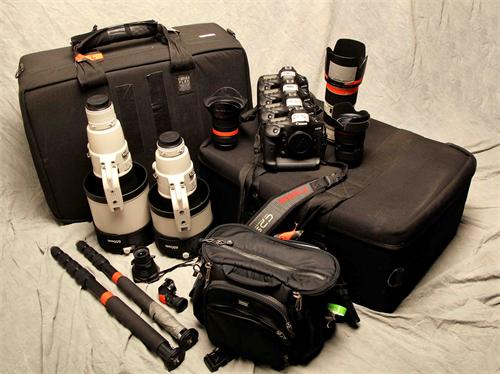
——Cameras, Lenses, and Kits That Help You Book, Shoot, and Get Paid Faster
By Ryan Mitchell | Updated on April 08, 2026 | 🕓 12 minutes
Key Highlights
- What actually determines profitable photography gear choices?
- What kind of equipment do high-earning photographers actually use?
- Why do clients care more about reliability than camera specifications?
- How should photographers structure their first money-making gear setup?
- When is the right time to upgrade to high-end equipment?
Last summer, I met a photographer who was hired to shoot a brand launch event. He showed up with two of the latest flagship camera bodies, a lens kit worth over $15,000, and a brand-new top-tier gimbal. Sounds professional, right?
But on-site, he spent 15 minutes tweaking gimbal settings and missed the CEO’s entrance—the key moment. Because he wasn’t familiar with the new menu system, he struggled to find focus settings in low light. When delivering the photos, the client pointed at a blurry head-table shot and asked:
"Is this what your professional gear produces?"
Meanwhile, another photographer—using a mid-range setup from three years ago (total gear value around $3,000)—knew every button by muscle memory. He shot the entire event without hesitation, finished early, and even captured extra behind-the-scenes content. The client immediately paid a deposit for the next booking.
This story reveals a counterintuitive truth: in commercial photography, clients pay for results—not for your gear specs.
Too many photographers fall into “gear acquisition syndrome,” chasing the latest camera bodies, widest apertures, and highest megapixels—assuming upgrades will automatically increase income. But the harsh reality of freelance photography is this:
your bank balance has never depended on your camera’s price tag.
i. Core Principle: Money-Making Gear ≠ Enthusiast Gear
Before going deeper, we need a clear evaluation framework. I call it the “Three Pillars of Money-Making Gear”:
1. Reliability
l No crashes, no data loss, consistent autofocus
l Dual card slots aren’t a “pro symbol”—they’re insurance. One data failure can cost you $500–$5,000 and permanently damage client trust
l Battery life must last a full shoot—not force you to hunt for outlets
2. Speed
l Fast autofocus, fast export, fast delivery
l In event photography, capturing the moment matters more than perfecting it
l Post-production efficiency directly determines your hourly rate. If exporting and culling take 50% of your time, your real income is already cut in half
3. Client-Facing Output
l Natural skin tones, consistent colors, usable straight-out-of-camera results
l Key insight: many “spec advantages” are invisible to clients. The extra 80% you paid for dynamic range won’t show up on their phone screen
l Clients care about “Do I look good?”—not “Does this image have 14 stops of dynamic range?”
Let’s be blunt: enthusiasts chase “better,” freelancers chase “reliable and sufficient.”
These are completely different budgeting philosophies.
ii. Choose Cameras by Income Type, Not Brand
Scenario 1: Event Photography (The Fastest Way to Monetize)
Core needs:
l Strong high ISO performance (dim, mixed lighting is common)
l Reliable autofocus (subjects move unpredictably)
l Dual card slots (zero tolerance for failure)
Practical advice:
l Avoid slow-processing or high-megapixel cameras that lag
l Choose a camera you can operate blindly. In dark environments, you rely on muscle memory—not menus
Money factor:
Event photography is about no mistakes + fast delivery, not image perfection.
Typical rates: $200–$500 (entry-level), scaling to $800–$2,000 per event
Scenario 2: Portrait / Family / Kids Photography (Recurring Revenue)
Core needs:
l Natural color science (especially skin tones)
l Reliable eye autofocus
l Lightweight body (you’ll shoot for hours)
Practical advice:
l Consistency matters more than resolution
l Think about how clients share images—Instagram, social media, vertical formats
Money factor:
Repeat business depends on one thing: whether clients feel they look good.
Typical rates: $300–$800 per session, weddings $1,500–$5,000
Scenario 3: Commercial / Product Photography (High Ticket, Higher Skill)
Core needs:
l Resolution (for cropping and print)
l Dynamic range
l Lighting compatibility
Key insight:
In commercial photography, lighting matters more than the camera body.
Clients often provide reference images—color accuracy matters more than features
Typical rates: $500–$2,000 per product set, $2,000–$10,000 for campaigns
Scenario 4: Video / Hybrid Work (The Direction of the Industry)
Core needs:
l Stable video recording
l Reliable autofocus tracking
l Long recording capability
Industry reality:
Clients increasingly expect photo + video packages
Money factor:
Video is no longer a bonus—it’s a baseline requirement
Typical rates: $500–$1,500 per short video, $2,000–$10,000 for brand videos
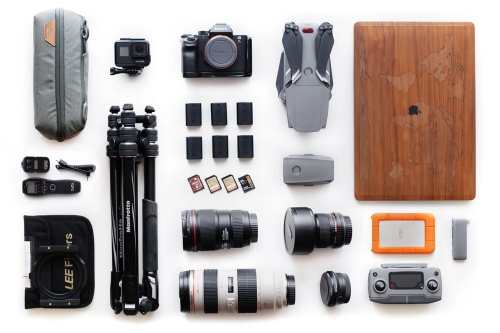
iii. Lenses Define What You Can Sell
If the camera is your tool, lenses define your business scope.
Lens 1: 24–70mm Zoom (The Ultimate Money Lens)
l Covers 80% of real-world jobs
l Reduces lens switching = higher efficiency
> If you can only buy one lens, this is it.
Lens 2: 50mm or 85mm Prime (Portrait Monetization Tool)
l Creates subject separation clients notice
l Increases perceived value
A 50mm f/1.8 is one of the highest ROI purchases you can make
Lens 3: Wide Angle (Gateway to High-Frequency Work)
l Real estate, Airbnb, commercial spaces
l High volume, recurring clients
Many photographers ignore this market—but it offers stable income
iv. The Minimum Viable Money-Making Kit
Budget Setup ($2,000–$3,500)
Core gear:
l Reliable camera body ($800–$1,500)
l 24–70mm zoom ($400–$900)
l 50mm prime ($150–$400)
l Basic flash or reflector ($50–$300)
Often-overlooked essentials:
l Spare batteries ×2 + charger
l Multiple small memory cards
l 5-in-1 reflector
Buying Strategy
1. Rent before you buy to reduce trial-and-error costs
l Not sure if you’re suitable for wedding photography? Rent a camera body first (around $50–$100/day) and try shooting two gigs
l Want to get into product photography? Rent a macro lens and lighting first to validate market demand before purchasing
2. Prioritize “money-making gear,” not “desire-driven gear”
l Distinguish between “business need” and “enthusiast desire”: do you need an 85mm f/1.4 (around $1,500–$2,500) because clients are willing to pay more for it, or because you think it looks “professional”?
l Cash flow first: don’t buy a full kit at once. Keep at least 3 months of operating capital (recommended minimum $1,500–$3,000)
3. Build a “gear usage log”
l Record the usage frequency and income generated by each piece of equipment
l Quarterly audit: if a piece of gear has been unused for more than 6 months, consider selling it
v. The Truth Most People Won’t Say
Truth 1: Gear upgrades don’t increase income directly
I’ve seen too many photographers upgrade from body A to body B, lens C to lens D, yet their bookings and pricing remain unchanged.
Why? Because clients don’t pay for specs. Your new camera may have 15 stops of dynamic range, but clients only care about “Does my portrait look good?”
Truth 2: Clients don’t care what camera you use
Clients will never ask: “How many megapixels is your camera?”
They will ask: “Can you guarantee nothing goes wrong?”
But clients do care whether you are “reliable.”
And reliability is often reflected in details: Do you have spare batteries? Are there enough memory cards? Do you have contingency plans for unexpected situations? These build trust far more than camera model names.
Truth 3: The highest-earning photographers use “average” gear
If you observe freelance photographers earning $5,000–$15,000 per month, you’ll notice a pattern: their gear is usually “just enough,” but their workflow is highly optimized.
l They know exactly what to bring to each shoot—nothing more, nothing less
l Their post-production workflows are standardized and highly efficient
l Their delivery systems feel professional to clients (e.g., gallery platforms, retouched previews, fast turnaround)
Because they optimize the entire “from shoot to payment” pipeline, not individual camera specs.
vi. Action Plan: From First Job to Consistent Income
Step 1: Pick one monetizable niche
l Event or portrait—start focused
l Do not try to be “all-rounder” from the start—first build a reputation of “consistent delivery” in one niche
Step 2: Start with minimal gear
l Refer to the entry-level kit above (around $2,000–$3,500), you can start booking jobs tomorrow
l Core principle: validate market demand first, then upgrade gear. Do not buy a full kit before finding clients
Step 3: Low price → portfolio → raise rates
l The first 5 jobs can be at “cost price” or even free (for friends only), with the goal of building real work samples and client testimonials
l After 10 solid sets of work, start increasing prices
l After 3 repeat clients, you already have a stable cash flow foundation
Step 4: Reinvest income
l Set a strict “gear investment / monthly income” ratio (recommended ≤30%)
l After every income, ask yourself: “Will this investment help me charge higher rates, or is it just for personal satisfaction?”
Don’t wait until your gear is ready to start making money—use money to upgrade your gear.
vii. Advanced Strategy: From Booking to Pricing Power
When you reach stable monthly income of $3,000+, your gear decision logic must evolve.
Medium format / high megapixel justification
When do you need an upgrade?
l When you start taking print-based commercial work (magazines, billboards), high resolution becomes mandatory
l When you need heavy cropping flexibility (event photography, journalism), high resolution provides safety margin
ROI calculation: if upgrading allows you to go from $1,000 per job to $3,000 per job, and monthly volume is stable, then it is worth investing
Professional lighting system selection logic
Power is not the only metric—t0.1 flash duration is more important:
l For liquid splash or high-speed motion, normal flashes cannot freeze motion; professional lighting systems are required
l Brand lock-in effect: once you choose systems like Profoto/Broncolor (single light $1,000–$3,000), accessory ecosystems create strong dependency, so initial choice must be careful
Gear and branding synergy
Client psychology: your gear appearance directly influences how clients perceive your pricing level
Strategy recommendation: investing in a professional camera bag (around $150–$300) and maintaining clean gear organization can improve client trust more than upgrading camera bodies
viii. Global Gear Buying Strategy
Price differences
l Japan: strong used market
l Hong Kong: tax advantages
l USA: bundle deals (B&H, Adorama)
Warranty & risk
l Global warranty is worth the extra cost
l Keep receipts for cross-border travel
Conclusion: Shift from Gear Thinking to Business Thinking
The gap between hobbyists and professionals is rarely gear—
it’s how quickly they turn resources into paid results.
High-end gear is leverage—but only once you already have business.
For beginners, focus on:
reliability, speed, and client-visible value.
Your first money-making camera doesn’t need to be the newest.
It needs to be the one you know best, trust most, and can deliver with—on time, every time.
Once you’ve completed your 20th, 50th, 100th paid shoot,
you’ll know exactly what to upgrade—
because then, you’ll be making decisions based on business data,
not gear obsession.
FAQs
1. Should beginners rent or buy photography gear first?
Renting is often recommended to test different photography niches (weddings, products, events) before making large investments.
2. What type of photography is easiest to monetize for beginners?
Event photography and portrait photography are generally considered the fastest entry points due to high demand and relatively low barriers.
3. Do clients care about what camera I use?
Most clients do not ask about camera models. They care about reliability, delivery speed, and whether the final photos look good.
4. How much should I invest in gear when starting out?
A practical starting range is typically $2,000–$3,500 for a functional setup that covers most beginner commercial needs.
References
1. Adobe. (2024). Photography basics and professional workflow guide. Adobe Blog. [https://blog.adobe.com]
2. B&H Explora. (2023). Choosing the right camera gear for professional photography. [https://www.bhphotovideo.com/explora]
3. DPReview. (2024). Camera buying guide for working photographers. [https://www.dpreview.com]
4. PetaPixel. (2023). Why gear doesn’t define professional success in photography. [https://petapixel.com]
5. Sony Imaging. (2024). Professional workflow and reliability considerations in digital photography. [https://www.sony.com/alphauniverse]
About the Author
Ryan Mitchell
Focus: Freelance Photography, Client Work, Pricing
Ryan Mitchell focuses on the business side of photography, including client work, pricing strategies, and freelance survival. His writing breaks down how photographers turn skills into sustainable income in competitive markets.
Editorial Transparency Statement
This article is written from a practical freelance photography business perspective. It is based on industry workflow patterns, real-world client behavior observations, and widely accepted professional photography practices. No specific camera brands or product sponsorships influenced the content.
All recommendations are intended to be general educational guidance and should be adapted based on individual market conditions, experience level, and regional business environments.
Disclaimer
This content is for informational and educational purposes only and does not constitute financial, business, or professional equipment purchasing advice. Photography income varies significantly depending on location, skill level, market demand, and individual execution. Readers are encouraged to conduct their own research before making purchasing or business decisions.
Recommend:
You Tried Shooting Product Photos at Home—But They Look Cheap
The Hidden Legal Risks of Uploading Photos to Stock photography platforms
Why Your Dog Photos Never Look Sharp—Even When They’re Not Moving (And Why That’s Not the Real Problem)

Why Portrait Photography Isn’t Turning Into Income (And What Actually Fixes It)