
By Ethan Cole | Updated on March 20, 2026 | 🕓 9 minutes read
Key Highlights
- Why do we take fewer family photos even though our cameras are better than ever?
- What is “friction cost” and how does it silently reduce everyday photography?
- Are posed family photos less meaningful than candid moments?
- What kind of camera setup actually works for documenting real family life?
- How can you build habits that make photography automatic instead of intentional?
A Strange Pattern
Have you noticed this?
A few years ago, you probably took more photos. You were using a basic camera, maybe even an old phone. The image quality wasn’t great—noise, bad lighting, sometimes a little blurry.
But they existed.
Now? Your gear is better than ever. A flagship phone, or that mirrorless camera you bought with so much excitement. Incredible image quality.
But you’re taking fewer photos.
Open your photo library and scroll back. What do you see? Screenshots. Receipts. A few photos from a trip eight months ago. A couple of “everyone smile at the camera” birthday shots.
And then… nothing. Weeks of empty space.
It’s not because you’re lazy. And it’s not because you care less about your family.
It’s because your system for taking photos has made the act of documenting life too difficult.
Better Gear, Fewer Photos: What’s Going Wrong?
Most people think they take fewer photos because their camera isn’t good enough.
“Maybe I need a better lens. Maybe I should upgrade to full-frame.”
And then what happens? The gear gets heavier. The system gets more complicated. You feel even less like carrying it around.
The problem isn’t your gear. It’s friction.
What is friction? It’s everything that stops you from pressing the shutter:
l The camera is too heavy, so you don’t want to carry it
l It takes too long to turn on, and the moment is gone
l The menu is too complicated—adjusting settings takes forever
l You feel pressure to “take a good photo,” so you avoid taking one at all
l You think, “There’s nothing worth photographing today,” so you don’t even try
You think you need a better camera.
What you actually need is a system you want to pick up.
You’re Not Photographing Life—You’re Photographing “Events”
Think about when you usually take photos:
l Holidays
l Travel
l Birthdays
l Kids’ performances
These aren’t everyday life. These are pre-approved, “worthy” moments.
But what about real life?
l A chaotic Tuesday morning breakfast
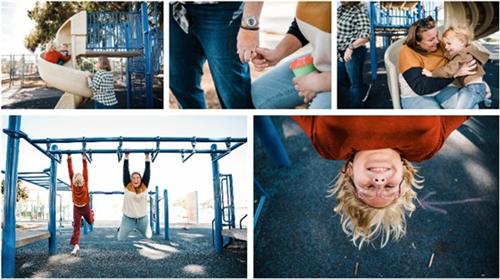
l Your child lying on the floor playing with the dog
l A rainy afternoon, all three of you squeezed onto the couch watching cartoons
l Shoes and backpacks scattered everywhere before heading out
Did you photograph those?
Probably not.
Because you thought they weren’t “worth it.” Not beautiful enough. Not perfect enough. Not “photographic” enough.
So you end up photographing a poster of your life, instead of your life itself.
Posters look great. But no one remembers a family through posters.
Why Posed Photos Feel Empty
I once did a simple experiment. I went through five years of family photos and divided them into two categories:
Category 1: “Everyone look at the camera and smile” — holidays, gatherings, planned shots.
Category 2: No one knew I was taking a photo — a child with sauce all over their face, my partner fixing a toy with a furrowed brow, the dog yawning in a patch of sunlight.
Put side by side, the difference is striking:
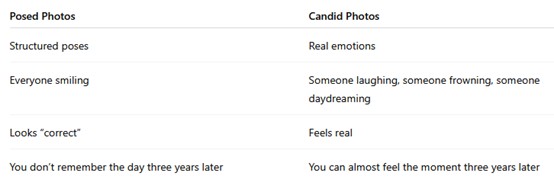
The more you try to control a moment, the less real it becomes.
That’s worth sitting with for a few seconds.
Children are not most themselves when they’re smiling at a camera. They’re themselves when they’re watching ants, getting frustrated over falling blocks, or quietly resting against you.
Those moments don’t wait.
They appear, linger for seconds, and disappear forever.
A Photo I Almost Missed
Here’s something real.
One ordinary Tuesday evening last year. Around 7 p.m., just after dark. My child was drawing on the floor, my partner leaning on the couch reading, an old jazz station playing in the background.
Nothing special.
I had a small camera nearby (more on that later). Without thinking, I picked it up and took two photos. One of them was nothing remarkable—slightly blurry, not great lighting, my child looking down at the paper.
But it became my favorite photo of the year.
Not because it was technically good. But because every time I see it, I remember the temperature of that evening, the smell of the room, even the song on the radio.
If I had thought, “This isn’t worth photographing,” that image wouldn’t exist.
The most valuable photos are often the ones you almost didn’t take.
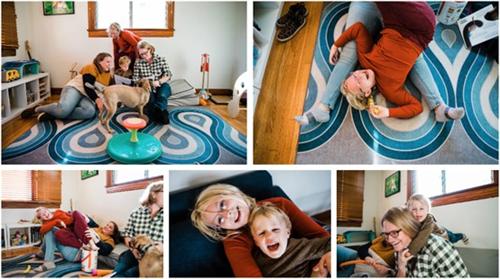
Image Credit - KAYLA MALTESE
What Kind of Camera Actually Works for Family Life?
Let’s start with what doesn’t work.
Most cameras are designed for what? Professional photographers. High resolution, large apertures, endless buttons and menus. These are tools for professionals—but obstacles for everyday family use.
Full-frame? Not necessary. No one can tell on a phone screen.
High megapixels? Not necessary. You’re not printing billboards.
A collection of lenses? Not necessary. You need one lens, not a kit.
For family photography, only five things really matter:
1. Speed
The time between “I want to take a photo” and “the camera is ready” should be as short as possible.
More than two seconds is already too long. Kids won’t wait.
2. Portability
If a camera requires a dedicated camera bag, you probably won’t bring it.
The best camera isn’t the one with the best image quality—it’s the one that happens to be within reach when life happens.
3. Simplicity
You don’t need 30 focus points or complex menus.
You need a camera that works well in auto mode. Fewer buttons, fewer choices, less hesitation.
4. Emotional Distance
Some cameras are so big that the moment you raise them, everyone becomes aware.
A good family camera is small and unobtrusive. The less attention it draws, the more real your photos will be.
5. Always Available
This matters more than anything else.
A great camera that’s not with you is useless.
Keep it where you live your life—not hidden away. On the table. On a shelf. Within reach.
Three Setups That Actually Work
These aren’t product recommendations—they’re approaches.
Setup 1: The Minimalist (Best for Most People)
Core gear: your phone + a tiny secondary device
Your phone is already good enough.
If it struggles in certain situations (low light, fast movement), add a small device—a compact camera or action camera. Something you can leave out and grab instantly.
Principle: If it needs its own bag, it’s not the right tool.
Setup 2: Light “Serious” Setup (One Camera, One Lens)
If you want better quality without falling into gear obsession:
Buy one camera and one lens. Then stop.
No zoom lenses. A single prime lens (around 35mm or 50mm equivalent).
Why?
l No decision fatigue
l Always ready
l No lens switching
l Much lighter
Setup 3: Record-First
This flips the usual idea of photography.
Instead of reacting to moments, you let moments happen and get recorded.
Set up a fixed device in your home—a corner of the living room, near the dining table. It could be an old phone, a camera, or an action cam.
Let it record automatically at certain times.
Come back a week later and review.
You’ll find moments you never even noticed.
These are not photos you took. These are moments you allowed to exist.
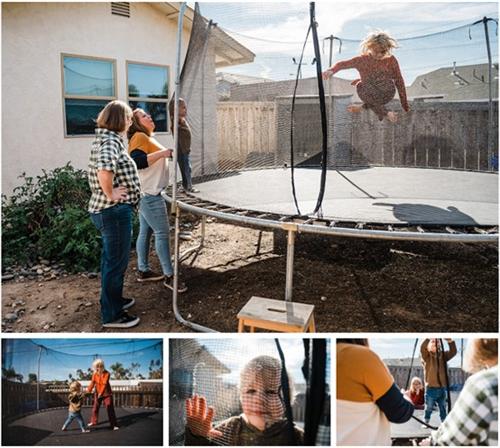
Image Credit - KAYLA MALTESE
What I Actually Use Now
After talking through all these ideas, it can still feel a bit abstract without a concrete example. So here’s what I actually use.
Right now, I use a compact mirrorless camera—something roughly the size of a Sony a6000—paired with a single prime lens. No backup lenses, no extra gear. Most of the time, it just sits on the table in my living room or goes into whatever bag I’m already carrying.
I don’t “bring it with me” anymore. It’s simply part of my everyday life.
This setup isn’t the lightest, and it’s not the best in terms of image quality.
But it has a few qualities that keep me using it:
l I can pick it up and shoot within seconds, with no preparation
l The automatic mode is reliable enough that I don’t have to think about settings
l Its presence doesn’t immediately make my family feel like they’re being photographed
Most of the time, it doesn’t even feel like I’m “taking photos.” I’m just pressing the shutter as things happen.
Of course, it has its downsides. It’s not great in very low light, and the autofocus can occasionally lag behind. Compared to higher-end gear, it’s far from perfect. But those limitations hardly matter to me.
Because what truly determines the value of a photo is not how “good” it is—but whether it was taken at all.
If you already have gear, there’s no need to rush into replacing it. Try simplifying it to a point where you’re willing to pick it up every day. Reduce choices, reduce preparation, reduce hesitation.
What changes in the end isn’t your equipment—it’s the way you document your life.
How to Actually Start Documenting Life
Tools matter less than behavior.
1. Stop Waiting for “Worthy” Moments
Assume everything is worth documenting.
Because it is.
2. Lower Your Standards
You don’t need:
l Perfect composition
l Perfect exposure
l Perfect focus
l Perfect color
Done is better than perfect.
3. Build Triggers
Don’t rely on motivation.
Create automatic moments:
l After dinner, take one photo
l Weekend mornings, document one hour
l When your child walks in the door
l Before leaving the house
4. Accept the Mess
Life with kids is messy.
Photograph it anyway.
Because one day, that mess will be memory.
Years Later, No One Cares About Image Quality
I’ve seen old family photos—faded, blurry, imperfect.
No one says, “I wish this had better resolution.”
They say:
l “You were so small.”
l “That was our old house.”
l “That dog lived so long.”
l “Your dad had so much hair.”
The value of a photo is not in its quality—but in its existence.
One Simple Thing to Do Today
If you only take one thing from this:
Take your camera (or just your phone), place it where you live your life, and take five photos today of things that feel “not worth photographing.”
Tomorrow, you’ll realize:
Those moments are everything.
Family photography isn’t about better gear.
It’s about removing everything that gets between you and the shutter.
You don’t need more equipment.
You need less hesitation.
FAQs
1. Why do family moments often feel more meaningful in hindsight than in the moment?
Because emotional value in memory increases over time, especially when images capture context rather than perfection.
2. Is it better to take many photos or only a few intentional ones?
For family life, consistency matters more than volume. A steady stream of simple, low-pressure photos usually creates a stronger memory archive.
3. Do children behave differently when they notice a camera?
Yes. Awareness of being photographed often changes natural behavior, which is why smaller, less intrusive setups tend to produce more authentic images.
4. What makes a photo feel “real” instead of staged?
Imperfection, movement, and lack of awareness of the camera often create a stronger sense of realism than carefully arranged poses.
5. Can smartphone photos really replace dedicated cameras for family documentation?
In most everyday situations, yes. Modern smartphones are more than sufficient for capturing meaningful family memories.
6. Why do most people stop photographing daily life after a while?
Because the process becomes mentally demanding—people start overthinking quality, composition, and “worthiness,” which reduces spontaneity.
7. How important is editing in family photography?
Minimal. Over-editing can reduce emotional authenticity. Most family photos are more powerful when kept close to their original form.
References
1. Rubinstein, D. (2023). Everyday Photography and the Culture of Memory. Journal of Visual Culture, 22(3), 45–62.
2. Hodges, L. (2024). The Psychology of Digital Photography Habits. Psychology of Aesthetics, Creativity, and the Arts, 18(2), 110–125.
3. Nguyen, T., & Larson, P. (2022). Friction in Digital Tool Usage and Creative Behavior. Human–Computer Interaction Review, 39(4), 201–219.
4. Adobe Inc. (2025). Digital Imaging Trends Report 2025. Adobe Research Publications.
5. Sontag, S. (revisited commentary in modern studies, 2023). On Photography and Memory in the Digital Age. Visual Studies Review, 31(1), 77–89.
About the Author
Ethan Cole
Focus: Tools, Camera Systems, Workflow Efficiency
Ethan Cole is a photography technology writer focused on camera systems, lens selection, and practical shooting setups. His work explores how photographers build efficient, flexible toolkits that reduce friction in real-world shooting—from everyday family moments to fast-changing travel scenarios.
Editorial Transparency Statement
This article is written as an educational and reflective essay based on practical photography experience and widely observed user behavior patterns in digital photography. It does not promote specific brands or commercial products as essential solutions.
Examples of cameras or tools mentioned are illustrative and not sponsored or affiliated recommendations. The goal is to help readers understand behavioral barriers (such as friction, overthinking, and perfectionism) that affect everyday photography habits.
All opinions expressed are intended for informational and inspirational purposes, not professional photographic instruction.
Disclaimer
This content is for informational and educational purposes only. It does not constitute professional photography, psychological, or technical advice. Individual results may vary depending on personal habits, equipment, and environment. Readers are encouraged to adapt suggestions to their own needs and circumstances.
Recommend:
Why Your Street Photos Feel Awkward—And How Zoom Lenses Quietly Ruin the Moment

Why Sharpness Doesn’t Fix Boring Plant Photos (Even with Expensive Gear)
The Gear That Actually Makes You Money in Photography (Not What You Think)
When Clients Say “Too Expensive”—What They Really Mean (And How to Respond Without Lowering Your Price)