
——Read This Before You Upload Your Next Photo — Or Risk Losing Control Forever
By Oliver Grant | Updated on April 03, 2026 | 🕓 12 minutes
Key Highlights
- What rights are you actually giving away when you upload a photo to a stock platform?
- Can you remove your images—and does that really stop future use?
- Why can your photo legally appear in global ad campaigns without your knowledge?
- Are “standard” and “extended” licenses really comparable across platforms?
- Does adding a watermark provide any meaningful protection?
- What hidden legal risks exist in photos that include people, brands, or locations?
- Who benefits most from stock photography—and who should avoid it entirely?
I. A Real Scenario That “Looks Profitable—But Isn’t”
In early 2024, a freelance photographer with five years of experience received his annual statement from a stock platform: over 300 images he had uploaded to a well-known stock site generated a total of $1,200 over two years. On average, each image earned about $2 per year. For someone treating photography as a side hustle, this “passive income” initially felt satisfying.
But one unexpected moment changed his perspective.
While shooting a commercial project for a client, he spotted his own image—an aurora photo he had taken in Iceland—displayed on a massive lightbox advertisement in a shopping mall. It was being used as the main visual for a global campaign by a major outdoor brand.
He had never been notified. He received no additional compensation.
When he contacted the platform, the response was polite but cold: under the licensing terms he had agreed to, the buyer had legally purchased an extended commercial license. The platform had no obligation to inform him of specific usage.
What shocked him further was what happened next.
When he tried to remove the image from the platform, he found it marked as “sold inventory.” Even if he deleted the file, previously sold licenses would remain valid—and the platform might still retain copies in its database for future licensing.
II. You Think You’re “Selling Photos”—But You’re Actually Selling Usage Rights
To understand the hidden risks of Stock photography platforms, you need to clarify three core legal concepts:
Copyright: Automatically yours the moment you press the shutter. Includes rights to reproduce, distribute, display, and adapt the work.
License: Permission granted to others to use your work under certain conditions. Stock licenses are often irrevocable, functioning almost like a permanent transfer in practice.
Usage Rights: The specific permissions granted to the buyer—such as geography, duration, media type, and purpose.
Stock photography platforms are not “photo marketplaces.” They are licensing platforms.
When you upload a photo, you are not selling the image itself—you are granting the platform the right to license its usage to third parties. Behind this simple mechanism lies a complex chain of rights transfers.
III. Common License Types: Simple Names, Complex Terms
Most Stock photography platforms offer several standard license types—but 90% of photographers don’t fully understand them:
Royalty-Free (RF): One-time payment for unlimited use within defined terms. But those “terms” vary widely—some allow global advertising, product packaging, and merchandise resale while paying photographers only a few dollars.
Rights-Managed (RM): Pricing based on usage scenario—but platforms often define “scenarios” vaguely. “Online use” could mean anything from a personal blog to global e-commerce.
Extended License: Allows large-scale distribution, resale (e.g., T-shirts, templates), and brand identity use. Higher price, but not necessarily higher photographer earnings.
Editorial Use Only: Intended for news or educational purposes—but definitions vary across jurisdictions.
Key Issue: License categories are not standardized across platforms, and the fine print varies significantly. A “standard license” on one platform may effectively match an “extended license” on another, while a “commercial license” on one site may include sensitive uses that are explicitly excluded elsewhere. If photographers rely solely on the label of a license type without examining the actual terms, they are highly likely to make flawed licensing decisions.
Practical checklist before uploading:
1. Is commercial use allowed? What exactly does that include?
2. Is resale permitted? Can buyers sell your image as part of another product?
3. Are derivative works allowed? Can your image be edited, remixed, or used in AI training?
4. Can it be used in advertising? Globally or regionally? Any restrictions?
5. Is the license revocable? What happens after deletion?
6. Are sublicenses allowed?
7. What are the geographic and time limits?
Most important advice:
Before uploading your first image, spend 30 minutes reading the licensing summary—and screenshot the version you agree to.
IV. Why Watermarks Offer Almost No Protection
Many photographers rely on watermarks—but in the context of Stock photography platforms, they are nearly useless.
Technical limitations:
l Cropping, AI inpainting, and overlays easily remove watermarks
l Advanced techniques can reconstruct original image data
Legal reality:
l Platform agreements often grant broad, irrevocable rights
l Some platforms reserve the right to remove watermarks for distribution
Watermarks create a false sense of security. The real risk is not unauthorized use—it’s authorized use you cannot control. Your image could appear in political campaigns, controversial brands, or sensitive industries—legally.
The real value of watermarks:
Proof of authorship—not protection.
Core advice:
Keep your most valuable work off Stock photography platforms. Build a “Do Not Upload” list:
l Images with strong branding potential
l Recognizable faces
l Unique compositions
l High long-term commercial or artistic value
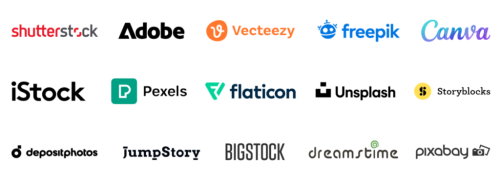
V. Why Licensing Systems Are So Confusing (And How They Strip Your Bargaining Power)
The complexity isn’t accidental—it’s part of the business model.
Common hidden clauses:
Sublicensing: Your images may circulate through unknown third-party platforms
Irrevocability: Licenses remain valid even after deletion
Worldwide: No geographic restrictions
Perpetual: Valid forever—even decades later
In a consolidating market, platforms hold increasing power, leaving individual photographers with little negotiating leverage.
Practical steps:
1. Review license types carefully before uploading
2. Screenshot terms at upload
3. Regularly monitor your licensing activity
VI. “Personal Use vs Commercial Use”: A Risky Gray Area
Stock photography platforms typically divide licenses into two broad categories: “personal use” and “commercial use.” However, this seemingly clear distinction is, in reality, full of gray areas.
“Personal use” is often defined by platforms as “non-commercial use,” but in practice the boundaries are highly ambiguous:
l Does a personal blog that generates ad revenue count as personal or commercial use?
l How should social media accounts with brand partnerships or sponsorships be classified?
l Where do promotional materials created by non-profit organizations—often with indirect commercial benefits—fall?
In most cases, platforms shift the responsibility of interpretation onto the buyer. However, photographers may still find themselves indirectly involved in infringement disputes as a result.
Pricing imbalance:
A small business presentation and a global campaign may pay the same under RF licensing.
Sensitive usage risks:
Your image could be used in:
l Medical claims
l Financial advertising
l Political messaging
And you may have no control over it.
VII. Hidden Third-Party Rights in Your Photos
Photographers often overlook rights embedded within the image itself:
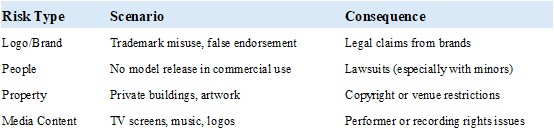
Core recommendations:
l Mark street photography as “Editorial Use Only”
l Avoid commercial licensing for images with buildings or artwork
l Develop “clean shooting” habits
l Keep RAW files and shooting records
l Never falsify model releases
VIII. A More Realistic Conclusion: Who Stock Photography Is (and Isn’t) For
Suitable for:
l High-volume creators
l Low-risk content (landscapes, textures, still life)
l Those comfortable with low but cumulative income
Not suitable for:
l Client-based commercial photographers
l Personal brand builders
l Creators of high-value or exclusive work
Conclusion: Awareness Is Your First Line of Defense
Stock photography platforms are not inherently problematic—they provide real monetization opportunities.
The real issue is information asymmetry.
Most photographers:
l Don’t fully understand what they agree to
l Don’t question the trade-offs
l Only realize the consequences after losing control
Uploading takes one second.
Reversing it may be impossible.
FAQs
1. Do I still own the copyright after uploading to a stock platform?
Yes, you retain copyright. However, you grant broad licensing rights to the platform, which may significantly limit your control over how the image is used.
2. Is “Royalty-Free” the same as “free to use”?
No. “Royalty-Free” means the buyer pays once and can use the image multiple times within the license terms—it does not mean the image is free.
3. Do I need model or property releases for stock photography?
Yes, for commercial use. Any recognizable person or private property typically requires proper releases to avoid legal disputes.
4. Are stock photography platforms responsible if my image is misused?
Usually not. Platforms often shift responsibility to the buyer, but photographers may still become involved in disputes depending on the situation.
5. Can my images be used to train AI models?
Potentially yes, depending on the platform’s terms. Some licenses allow derivative use, which may include AI training or dataset inclusion.
References
1. Bridy, A. (2023). The evolution of licensing in digital content platforms. Journal of Intellectual Property Law, 30(2), 145–178.
2. European Commission. (2022). Copyright and licensing in the digital single market. [https://ec.europa.eu]
3. Goldman, E. (2021). Copyright licensing and online platforms: A legal overview. Stanford Technology Law Review, 24(1), 67–102.
4. Guibault, L., & Wiebe, A. (2022). Safe to be open? Study on the protection of user-generated content. Kluwer Law International.
5. U.S. Copyright Office. (2023). Copyright basics (Circular 1). [https://www.copyright.gov]
6. World Intellectual Property Organization (WIPO). (2022). Understanding copyright and related rights. [https://www.wipo.int]
About the Author
Oliver Grant
Focus: Legal Risks, Privacy, Real-World Incidents
Oliver Grant writes about the legal and ethical boundaries of photography, with a focus on privacy, liability, and real-world risk scenarios. His work examines what can go wrong—and how photographers can protect themselves before it does.
Editorial Transparency Statement
This article is based on industry practices, publicly available licensing frameworks, and the author’s professional experience in photography and content licensing. No stock platform has sponsored or influenced the content. All examples are illustrative and intended to reflect common real-world scenarios.
Disclaimer
This content is provided for informational purposes only and does not constitute legal advice. Licensing terms vary by platform and jurisdiction. Readers should consult a qualified intellectual property attorney for advice specific to their situation before making legal or business decisions.
Recommend:

The Hidden Legal Risks of Candid Photography: When a Spontaneous Shot Can Get You Sued
Choosing a Versatile Lens for Everyday Photography (That Handles 80% of Work)
Why Portrait Photography Isn’t Turning Into Income (And What Actually Fixes It)
The Hidden Legal Risks of Uploading Photos to Stock photography platforms